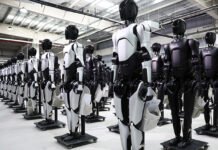
Japan Airlines (JAL) has launched a new initiative that could reshape airport operations in the coming years. The airline has begun testing humanoid robots at Tokyo’s Haneda Airport as part of a long-term effort to address growing labor shortages in Japan.
The trial, which started in May, will run for two years and focuses on assigning robots to physically demanding ground-handling tasks that are traditionally carried out by human workers.
Robots Take on Luggage and Cargo Duties
During the pilot program, humanoid robots will assist with moving baggage and cargo around Haneda Airport, one of the busiest aviation hubs in the world.
Handling more than 60 million passengers annually, Haneda requires a large workforce to manage daily operations. By introducing robots into cargo-handling activities, JAL hopes to ease pressure on employees while maintaining operational efficiency.
The airline is conducting the project in collaboration with Japan Airlines GMO Internet Group.
Demonstration Highlights Robot Capabilities
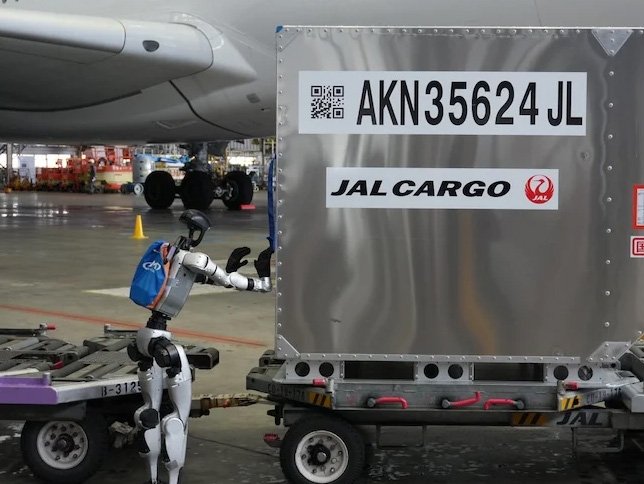
At a recent media event, a humanoid robot developed by Chinese robotics company Unitree demonstrated its ability to support airport ground operations.
Standing approximately 130 centimeters tall, the robot was shown helping move cargo onto a conveyor system positioned beside a JAL aircraft. It also interacted with its surroundings, illustrating how the technology could function alongside human workers in a real airport environment.
Growing Tourism Increases Demand for Workers
Japan’s aviation sector is facing increasing staffing challenges as international tourism continues to expand.
The country welcomed more than seven million visitors during the first two months of 2026, following a record-breaking 42.7 million arrivals in the previous year. The rise in passenger traffic has increased demand for airport staff across multiple operational areas.
At the same time, Japan’s working-age population continues to decline, making it more difficult for businesses to recruit enough employees.
Human Oversight Will Remain Essential
While robots may assist with labor-intensive work, JAL officials emphasized that human workers will continue to handle critical responsibilities.
According to company representatives, important functions such as safety management and operational decision-making will remain under human supervision to ensure airport activities meet required standards.
The airline views robotic support as a complement to its workforce rather than a complete replacement for employees.
Future Plans Extend Beyond Cargo Handling
JAL is exploring additional ways to integrate robotics into airport operations.
Beyond moving luggage and cargo, the company is considering the use of humanoid robots for tasks such as cleaning aircraft cabins and operating ground-support equipment.
Executives believe these applications could further improve productivity while helping address long-term labor shortages.
Airports Increasingly Turn to Automation
Several airports across Japan already use robotic technologies for services including security patrols and retail assistance.
The latest initiative reflects a broader trend toward automation as organizations search for solutions to workforce constraints and rising operational demands.
Japan Faces Long-Term Workforce Challenges
Experts warn that Japan’s shrinking domestic workforce could create significant economic challenges in the coming decades.
One estimate suggests the country may require more than 6.5 million foreign workers by 2040 to achieve its economic growth goals. Although Japan’s foreign population has increased in recent years, immigration remains a politically sensitive issue.
Industry leaders argue that technologies such as humanoid robots could help fill some labor gaps while supporting essential services in sectors experiencing worker shortages.
Continuous Operation Offers Practical Benefits
According to project partners, the robots can operate continuously for two to three hours before requiring downtime.
Their ability to perform repetitive physical tasks makes them a potentially valuable addition to airport operations, particularly as passenger numbers continue to rise and staffing challenges persist.
The ongoing trial will help determine whether humanoid robots can become a permanent feature of Japan Airlines’ ground-handling operations in the future.