
Yasuo Takamatsu lost his wife, Yuko, in the 2011 Japanese tsunami. Even after fifteen years, he has not given up hope of finding her. Twice a month, Yasuo sets out to sea by boat from the port of Onagawa, in Japan’s northeastern Miyagi Prefecture.
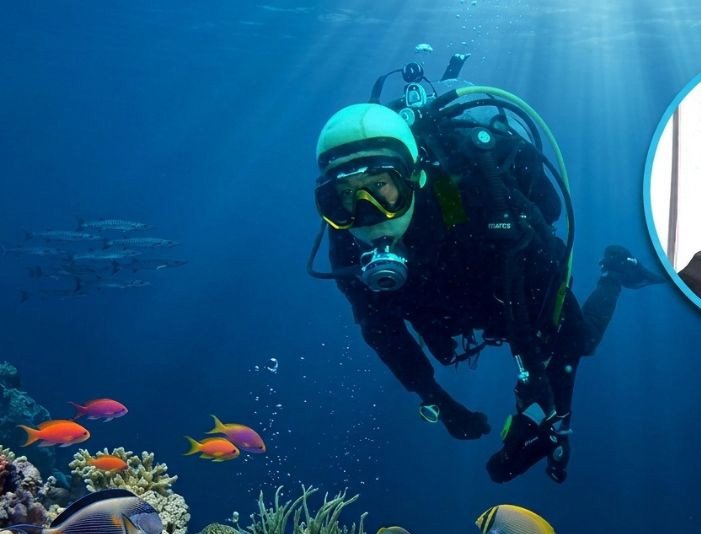
He conducts his underwater searches with great care and focus. To date, he has completed 763 dives.
On March 11, 2011, a massive tsunami—triggered by a devastating earthquake—struck the northeastern coast of Japan. The colossal waves surged as far as 10 kilometers inland, reducing populated areas to rubble in an instant. The disaster claimed hundreds of lives, while thousands of people remained unaccounted for.
That morning, Yasuo had dropped his wife, Yuko, off at her workplace. Before parting ways, they discussed plans for dinner—little did they know that this would be their final conversation.
Upon hearing the tsunami warning, Yuko and 12 of her colleagues took shelter on the roof of a building. From there, she sent a message to her husband: “Are you okay? I want to go home.”
Seeing the message, Yasuo assumed Yuko might be safe. However, when he visited the evacuation center the following day, he could not find her. He later learned that Yuko had been swept away by the catastrophic tsunami. Thus began his long vigil and an unending search to find his beloved wife.
He plunged into the sea to look for his wife.
For nearly two years, Yasuo watched as divers from the Japanese Coast Guard searched for missing individuals and their personal belongings. Eventually, realizing that his wife remained missing, he decided to become a diver himself. He believed that if he continued his regular searches, perhaps a day would come when he could be reunited with his wife.
Donning a helmet, an oxygen tank, and a weight belt, he has been descending into the deep ocean ever since. Whenever he encounters scattered remains underwater, Yasuo is reminded of his wife, Yuko. At times, he wonders—had he also been trapped amidst the wreckage, his wife would never have been able to return to the surface. Such thoughts bring him to tears.
Yuko’s remains were never found, so there is no traditional grave for Yasuo to visit to pay his respects. For him, diving into the depths of the ocean has become a personal ritual to remember his beloved.
He shares that, through his repeated dives, he has begun to feel as though Yuko might be somewhere nearby. This experience is entirely different from visiting a conventional grave; it feels as if he is going to meet his wife herself.
Finding New Life Amidst the Ruins
Despite losing his wife, Yasuo does not harbor hatred toward the sea. He believes that while the ocean can be dangerous, it also possesses a unique beauty.
Beneath the waves, the remnants of wrecked vehicles and other signs of the devastation still lie. Over time, these structures have transformed—they now function like artificial coral reefs, providing shelter for fish and a place for them to lay their eggs. Amid the devastation, the emergence of new life reminds Yasuo of nature’s remarkable power to renew and reshape its surroundings.
When asked what he might say if he were to ever see his wife again, Yasuo jokes that Yuko would likely be the first to remark, “My, how you’ve aged!”
Even fifteen years after the tsunami, the grief of losing his wife continues to haunt Yasuo. Yet, he has never stopped returning to the sea. With every dive, he feels that Yuko might be somewhere nearby—and it is this hope that draws him back to the seashore time and again.