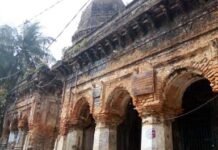

Panihar Public Library: Preserving 72 Years of Literary Heritage in Rajshahi
The Panihar Public Library, located in the remote village of Panihar in Rajshahi’s Godagari Upazila, is home to over 7,700 periodicals, books, and encyclopedias spanning literature, religion, poetry, science, and economics. Established in the mid-1940s, it once served as a beacon of knowledge in a region previously plagued by illiteracy. Today, decades of neglect have left the library in a state of decay, with many rare and valuable books at risk of being lost forever.
The Rise and Fall of Panihar Library
Founded by philanthropist Enayetullah Master, the library began in a tin shed on two acres of land beside his home. Inspired by his education at Nawab Bahadur High School in Murshidabad, Enayetullah dreamed of creating a library for his village after witnessing the power of access to books. Initially, he established a school in nearby Aihai village in 1938, convincing parents to send their children and bringing textbooks from Calcutta.
By 1945, as the collection of books grew, Panihar Library officially opened, with community support from local leaders such as Sagaram Majhi. Soon, the library became a hub for readers, poets, writers, and researchers who traveled to access its rare materials.
A Treasure Trove of Knowledge
Panihar Library’s collection includes works by iconic authors like Bankim Chandra, Sarat Chandra Chattopadhyay, Rabindranath Tagore, Kazi Nazrul Islam, Abul Mansur Ahmad, and Humayun Ahmed. It also houses periodicals from both sides of the border, including Shonibarer Chithi, Mashik Mohammadi, Mahe Nao, Jayati, Notun Din, Joy Bangla, and Dainik Bangla.
The library comprises around 30 cupboards, four tables, and 30 chairs. Before the pandemic, 20–25 regular readers visited daily; that number has now fallen to 10–12 due to mobile phone use and changing reading habits. Despite the decline in readership, many still value the library for its historical and literary significance.
Challenges and Neglect
Once supported under the Ministry of Education and Culture during the Pakistan period, the library now receives no regular grants. More than 7,500 books have deteriorated due to a lack of preservation. Termites infest old newspaper files, wooden cupboards are crumbling, and books over 100 years old are at risk of being lost.
Though some politicians have visited and made promises, very little action has been taken to restore or modernize the library. There is no internet, computer, or modern IT equipment on site. A small two-room structure, built in the 1990s with upazila council support, now houses reading programs and school activities.
Voices of Concern
Librarian Moazzem Hossain emphasizes the struggle to protect priceless books. He recalls the library’s walls adorned with portraits of famous events and sages, a silent testament to its past glory.
Students and researchers also recognize its value. Rajshahi University student Gholam Mostafa remarks, “There is a rare collection of books and periodicals of Bengali literature. Administrators should act to preserve them and capture the history of our country.”
Writer and researcher Khan Md. Rabiul Alam adds, “Visiting Panihar Library was eye-opening. Seventy-two years ago, such a library in a remote village was unimaginable. Preserving it is essential, as it is a significant monument of Bangladesh’s literary history.”
A Legacy Worth Preserving
Despite decades of neglect, Panihar Public Library remains a cultural and historical landmark. It stands as a testament to the vision of Enayetullah Master and the community that once thrived on its knowledge. Experts and visitors alike stress the urgent need for restoration and support to ensure this library continues to inspire generations to come.